Digitize customer readings
Move tank measurements out of notebooks, spreadsheets, and message threads into one dated customer tank record.
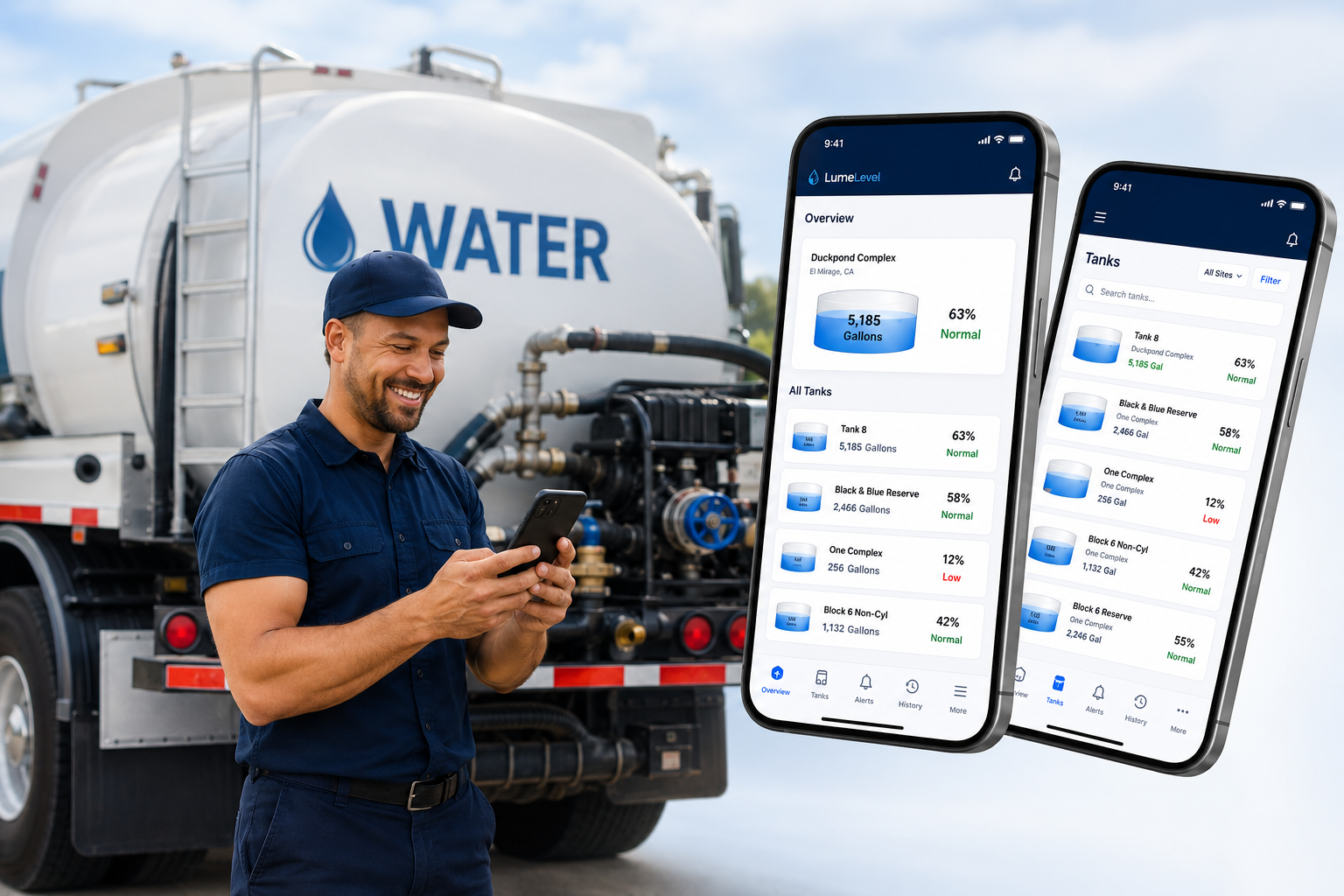
You already have the customer relationship, the delivery operation, knowledge of the route, and regular service touchpoints. The question is what becomes possible when tank status is added to what you already know.
Begin with the customers that create the most delivery pressure and prove the workflow before adding hardware everywhere.
Use remote readings where timing, route decisions, or customer assurance justify the added visibility.
Grow through service relationships, property portfolios, cleaning work, refill coordination, or a paid monitoring offer.
You already know your customers, routes, delivery pressures, and service patterns. Tank visibility adds earlier information. How you use that information depends on the business you already operate.
There is no single supplier model. Start with the work you already do and consider where knowing the tank sooner could change a decision, improve a service, or create something customers value.
Could better tank visibility improve a standing order, route priority, or inspection decision?
Could proactive visibility make your existing delivery service more valuable to the customer?
Would some customers pay for a higher-touch monitoring or refill-coordination service?
Could cleaning, repair, refill, or property-management work become the point where monitoring begins?
You do not need to automate every customer to learn whether earlier visibility improves a real delivery decision.
Customers can enter dated readings from a stick, ruler, gauge, or visual check and share selected tanks with you. That builds useful refill history now and helps identify where automatic monitoring may add value later.
Move tank measurements out of notebooks, spreadsheets, and message threads into one dated customer tank record.
Periodic shared readings give dispatchers more context before the customer reaches the emergency-call stage.
Record the delivery date and resulting tank status so the customer and supplier have a shared reference for follow-up and reconciliation.
Use the shared history to identify customers where automatic readings could create the most value.
The customer, caretaker, or driver records the current tank level.
The customer grants the supplier controlled access to the selected tank.
Where it fits, the customer can add Pebble to their monitoring setup, or the supplier can explore the broader managed-service model.
Begin with 3–5 customers who create the most refill pressure. Prove the shared-reading workflow now, then identify where customer-owned or managed automation could add the most value.
Manual tank measurements support operational visibility and delivery reconciliation. They do not replace a certified delivery meter or supplier invoice.
Choose how many customer tanks you would like shared with your Supplier account, then test whether the added visibility is included in your service or offered as a paid service.
Choose how many customer-owned tanks you would like shared with your Supplier account. Then test whether you would include that added visibility in your regular service or charge for it separately.
A Supplier account receives customer-owned tank shares. If you want your company to create and manage the monitoring setup for customers, that becomes a broader managed-service model.
Current supplier tier selected from the live catalog.
The business model above looks at Supplier portfolio economics and optional service revenue. This separate scenario lets you explore whether fewer check trips, better-timed deliveries, and fewer emergency runs could add operational value.
Conservative is intentionally harder to overstate.
A top-off, check trip, or poorly timed delivery avoided because tank status is visible.
See what LumeLevel looks like in practice.